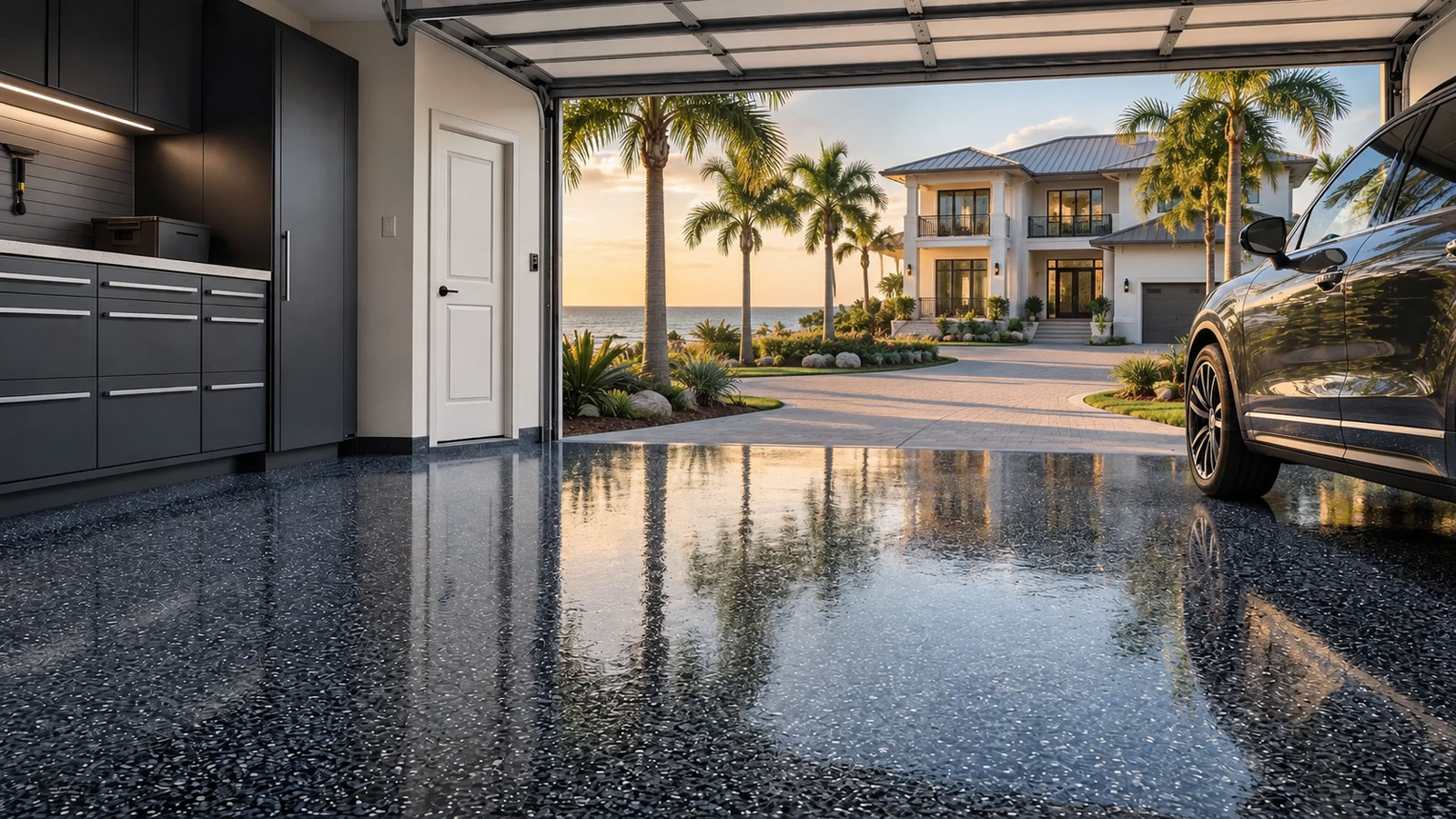
Garage Floor Coating in St. Johns, FL
Floor Coating Services in St. Johns, FL
St. Johns garage-floor coating needs to reflect the actual concrete and local drainage jurisdiction. St. Johns is an unincorporated community in St. Johns County. Stormwater permits and development clearances fall under county rather than Jacksonville city jurisdiction. Public records cannot diagnose a private slab; inspect old finishes and repairs.
New subdivisions have individual plat and site-plan approval histories. State road drainage may be maintained by FDOT rather than the county. In Northeast Florida, warm humid weather and heavy seasonal rain can make garage-door water and curing conditions relevant. Municipal records alone cannot prove garage flooding. Distinguish rainfall entering at a threshold from vehicle-tracked water and dampness that persists without cars.
Driveway grading is property-specific even within the same development. An installation plan should address concrete grinding, removal of older coatings, joint and patch treatment, topcoat texture and realistic reopening time. A cleanable epoxy, polyaspartic or flake system can be useful on properly prepared concrete, but cannot stop active exterior runoff or structural movement. Ask for a project-specific estimate rather than a citywide promise.
Local Market Insight
St. Johns is an unincorporated community in St. Johns County. State road drainage may be maintained by FDOT rather than the county. These records distinguish St. Johns's public services or planning history, while the garage's slab, driveway and water entry remain property-specific. Coating choices must follow inspection.
What Affects the Cost of Garage Floor Coating in St. Johns?
In St. Johns, a garage's preparation often changes the estimate as much as its size. Stormwater permits and development clearances fall under county rather than Jacksonville city jurisdiction. The local record is not a reason to assume a homeowner needs water mitigation or concrete repair without seeing the slab.
Require a written scope for grinding, old coatings, cracks, edges, finish texture, cleaning and manufacturer-supported vehicle-return timing. Include storage relocation and any separate drainage work where observed.
- Concrete finish history: Old epoxy, paint, sealer, patches and bare concrete need different treatment. A house built recently may still have surface films, while an older home can have a later replacement garage slab.
- Municipal or county drainage: St. Johns is an unincorporated community in St. Johns County. Public drainage responsibilities do not determine whether a private garage is wet; observe actual driveway runoff and threshold performance.
- Property water pathways: New subdivisions have individual plat and site-plan approval histories. Look for rain crossing the garage entrance, downspouts near the apron and water remaining on an empty floor before recommending any separate corrective work.
- Repairs and movement joints: Inspect old cracks, spalling, joints and weak repairs. A coating layer cannot stabilize structural movement or compensate for unsound concrete underneath it.
- Access and belongings: Steps, edges, shelving and stored lawn or beach equipment change grinding access and labor. Plan storage relocation instead of pricing only open square footage.
- Finish, heat and curing: The full primer, flake and topcoat system affects appearance and performance. Discuss texture for wet footwear, cleaning, application weather limits and realistic cure time.
Call for a clear, project-specific estimate — or request one online.
St. Johns Drainage Jurisdiction and Garage Thresholds
St. Johns is an unincorporated community in St. Johns County. Stormwater permits and development clearances fall under county rather than Jacksonville city jurisdiction. These two facts distinguish St. Johns's government or development history from neighboring areas. They are useful when identifying public stormwater responsibility, but cannot serve as a diagnosis of moisture or damage on a homeowner's concrete floor.
New subdivisions have individual plat and site-plan approval histories. Water at the garage entrance may follow rainfall, a blocked gutter or a poorly graded driveway. Water from a vehicle after a wet trip is a different issue, and dampness persisting with no vehicle present may require substrate testing. A homeowner should document the pattern before accepting an installation recommendation.
State road drainage may be maintained by FDOT rather than the county. A municipal stormwater plan describes public systems and regulated development. Private drives, HOA drainage and door seals may involve different responsibilities. An installer must keep exterior corrections separate from floor preparation, especially where rain flows toward a door.
A resin finish may improve cleaning on sound concrete, but it is not a waterproofing system for ongoing exterior entry. Assess old paint, oil, sealer, repairs, cracks and joint movement before grinding and coating. The preparation specification matters more than unsupported promises that a premium topcoat will solve every condition.
Preparing a St. Johns Garage for Coating
Driveway grading is property-specific even within the same development. This separate local fact belongs in the project context, but does not prove every nearby property has the same slab age or drainage. The contractor should inspect the actual concrete surface and document which steps are essential before decorative options are considered.
Garages used for daily parking, tools and household equipment need clear access around shelves, steps and door edges. Ask whether old finishes are bonded, whether hard patches need mechanical profiling and how cracks or moving joints will be treated. Make arrangements for possessions and alternate parking during curing.
Compare epoxy and polyaspartic as complete layered systems, considering traction, UV exposure where a door is often open, warm-weather application restrictions and manufacturer-supported reopening. Written repair work, topcoat selection and maintenance guidance make bids easier to compare fairly.
- Identify any old paint, epoxy or sealer.
- Inspect cracks and repaired concrete.
- Watch runoff at the doorway after rain.
- Separate car-tracked water from persistent dampness.
- Clear edges, storage and workbenches.
- Confirm coating layers, texture and cure guidance.
Frequently Asked Questions
What local drainage issue matters in St. Johns?
St. Johns is an unincorporated community in St. Johns County. This describes a public program or jurisdiction, not a private garage. Evaluate actual driveway slope, door seals and surface condition before selecting any coating or drainage repair.
Can a St. Johns garage be coated in humid weather?
It may be possible when the slab and ambient conditions meet the product instructions. The installer should verify surface dryness, temperature, preparation and cure schedule rather than rely on regional humidity averages.
Will the coating stop water from running under the garage door?
No. Recurring rain entry calls for separate drainage or door-seal work. Epoxy and polyaspartic systems do not correct bad grading or structural concrete movement by themselves.
Should I choose epoxy or polyaspartic in St. Johns?
Neither automatically. Inspect concrete, old coatings and repair needs, then compare mechanical profiling, layers, texture and cure time. A complete system specification provides a better basis than a material name.
What belongs in a St. Johns coating quote?
Ask for grinding, coatings removal, repairs, edge detail, flake and topcoat choices, maintenance and vehicle-return time. Include garage storage access and any separate threshold-drainage issue in the written scope.
St. Johns Neighborhoods & Local Context
Phone Quote Line
Speak with a local floor coating specialist about your project and get a realistic estimate range.
(904) 877-5527Typical Project Cost
$3,000–$5,500
Typical range for a standard two-car garage. Final pricing depends on floor size, concrete condition, prep work, coating type, and finish options.
Helpful Guides